New wild cat species Leopardus tilcayo discovered in Bolivia's Yungas cloud forest
A spotted cat from Bolivia's Yungas cloud forest has been confirmed as the first new living wild cat species formally described in over a century.
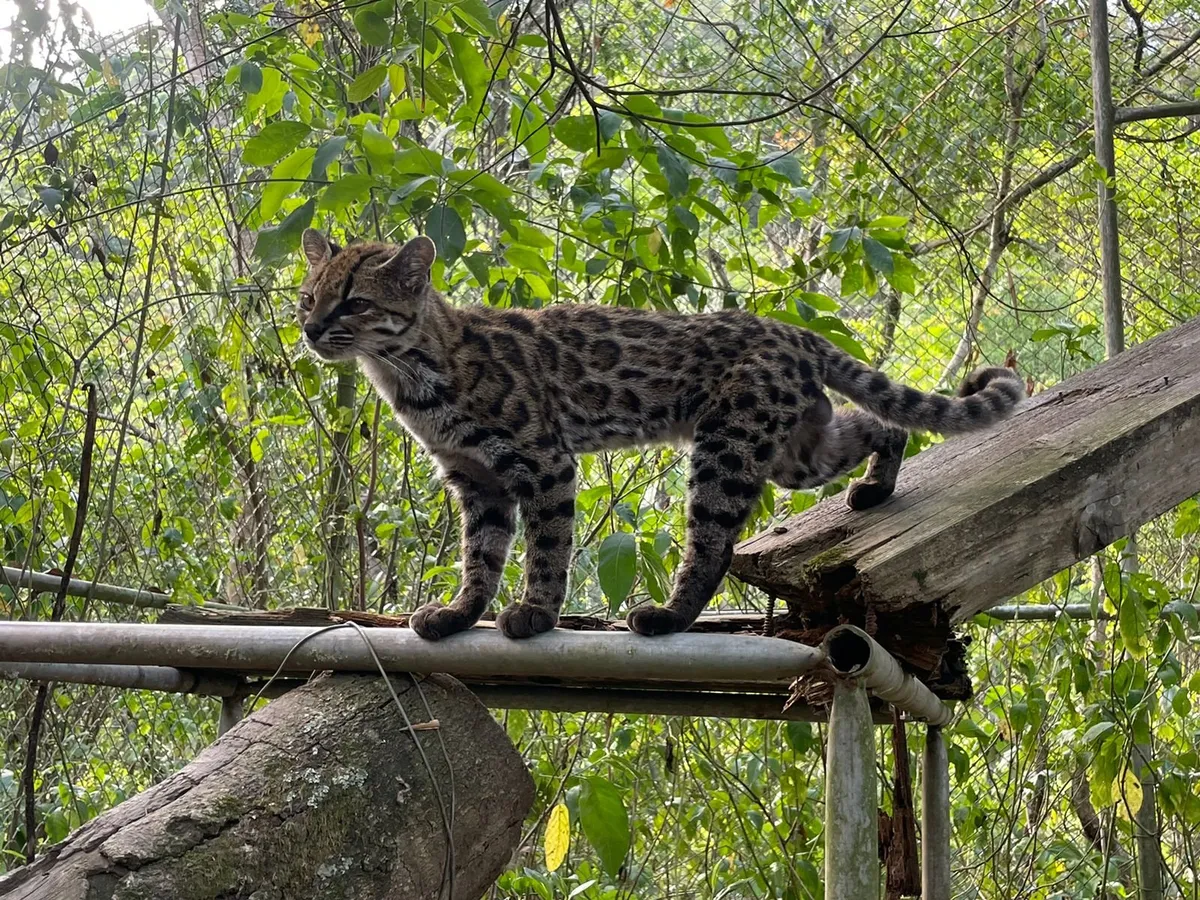

A spotted cat from the forests of Bolivia has been confirmed as a new species called Leopardus tilcayo, the first new living wild cat species named in more than 100 years. The only known living member is a 10-year-old male nicknamed ‘Tigrino’ at a wildlife sanctuary in Bolivia.
The cat inhabits Bolivia’s Yungas cloud forest, a mountainous region where the Andes meet the Amazon basin. It measures about 18 inches long and weighs about 3 pounds, placing it among the smaller members of the Leopardus genus that includes ocelots, margays, and the various tiger cats of Central and South America.
The formal description rests on genetic work that has redrawn the taxonomy of these small spotted cats. Where tiger cats were previously grouped as three species, genetic studies now show they comprise five distinct species. The tilcayo lineage separated from other tiger cats roughly 1.4 million years ago, a divergence deep enough to warrant species status under current taxonomic standards.
That genetic distance is what makes this more than a routine reclassification. A million-plus years of separate evolution in the Yungas cloud forest produced a cat that looks similar to its relatives but carries a distinct genetic signature. The challenge now is that with only one known individual, the full range, population size, and conservation status of Leopardus tilcayo remain essentially unknown.
Tigrino’s presence at a wildlife sanctuary suggests the species has been turning up in the region for some time, likely misidentified as one of the better-known tiger cat species. The formal description gives conservation biologists a starting point: a named species that can now be searched for systematically in museum collections and in the field. Whether the Yungas population is stable, declining, or already squeezed into remnant habitat is work that can now begin in earnest, a century after the last new living feline species received its scientific name.