The Brain Trades Its Immune System in Midlife and Dismantles Its Genome Alongside It
For decades, neuroscience has operated on the premise that the human brain is seeded with its resident immune cells at birth, which then persist unchanged throughout the rest of a person's life.
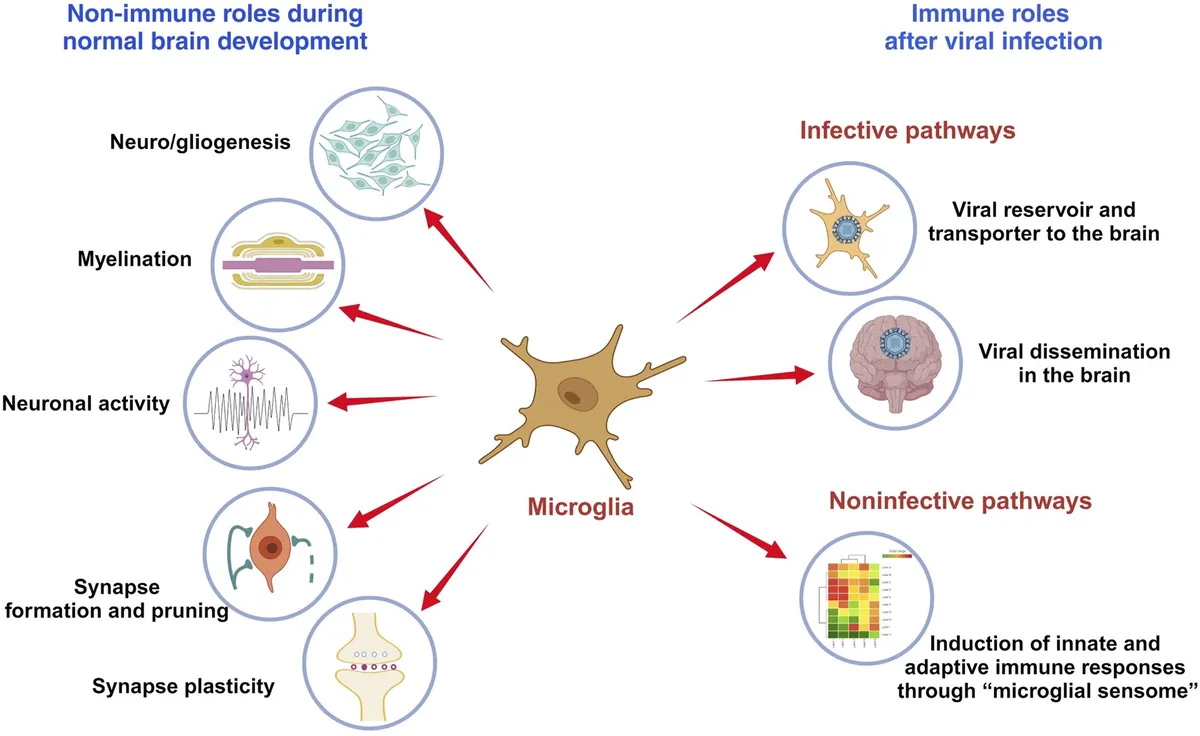

For decades, neuroscience has operated on the premise that the human brain is seeded with its resident immune cells at birth, which then persist unchanged throughout the rest of a person’s life. That foundational assumption just got overturned by research published in Science documenting dramatic shifts in brain immunity and gene regulation beginning precisely in midlife single-nucleus multiomic profiling of 40 adults revealed that between ages 50 and 75 embryonically derived microglia are replaced by proinflammatory monocyte-like cells while the three-dimensional genome architecture undergoes global erosion across multiple brain cell types.
The cellular turnover only exposes a deeper, structural reorganization happening inside the nucleus itself. Across different neural lineages, the physical scaffolding of the genome deteriorates as people age, fundamentally altering which genes remain accessible and how they are regulated in late adulthood. This nuclear restructuring does not remain confined to one tissue type but scales across the brain, quietly rewriting the epigenetic rules that keep different cell populations stable for a human lifetime.
Mapping these changes at single-cell resolution gives researchers unprecedented clarity into how brain tissue actually behaves over a full lifespan, moving beyond bulk-tissue averages that previously masked these localized nuclear shifts. What was once treated as a static immune ecosystem turns out to be a highly dynamic environment that recalibrates itself on a decades-long schedule, dismantling its own genomic frameworks long before cognitive symptoms typically appear.
If the midlife erosion of brain genome architecture and the subsequent recruitment of proinflammatory cells drive later cognitive decline, scientists can stop treating late-life dementia as an inevitable wear-and-tear inevitability and start designing therapies that target those specific biological handoffs a landmark single-cell study found those dramatic midlife shifts in brain immune cells and genome organization point directly toward a pathway for new therapeutic targets for dementia.
Neuroscience built its longevity models on the idea that a fixed population of cells quietly guards the brain until the end, but this recent work reframes that entire timeline. The hippocampus does not simply wear out over time; it systematically exchanges cell types and dismantles its own genomic scaffolding in midlife, opening a much wider window for intervention than previously existed. Understanding exactly when those architectural foundations begin to crack is now the necessary next step for anyone hoping to keep dementia off the clock.