NASA's Roman Space Telescope enters final science commissioning phase after completing observatory checkout
The Nancy Grace Roman Space Telescope has successfully completed its comprehensive observatory checkout and is now entering the final phase of science commissioning.
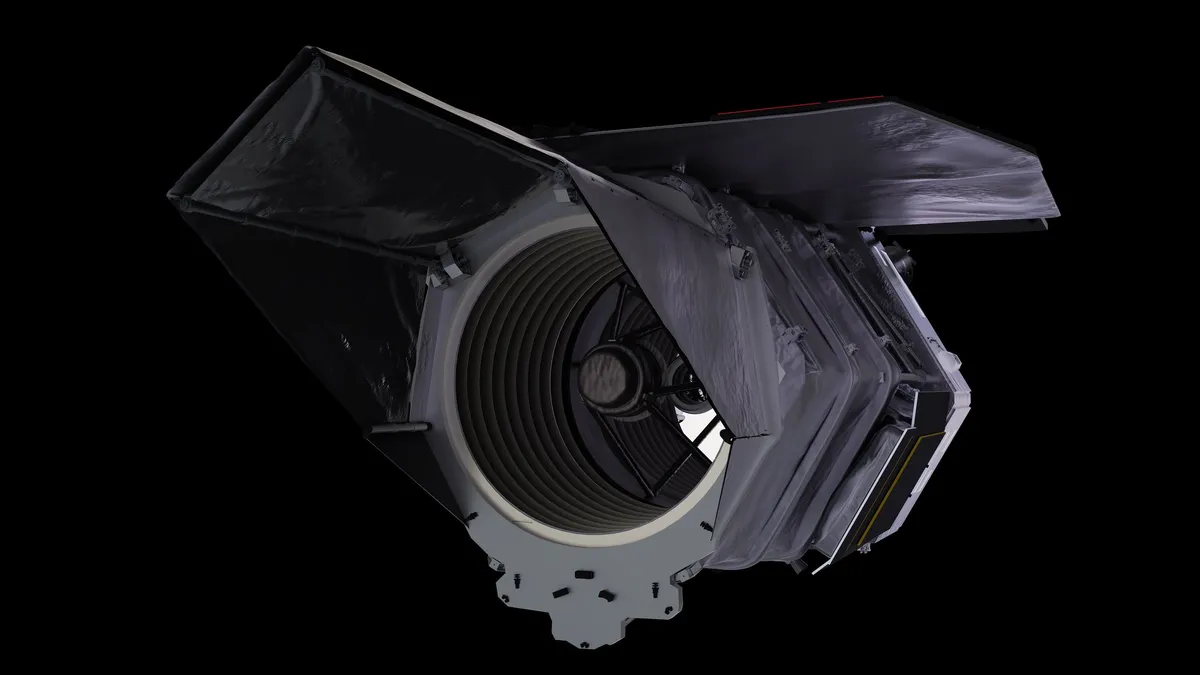

The Nancy Grace Roman Space Telescope has moved into its final science commissioning phase after completing a comprehensive checkout of the observatory and its primary instruments, according to NASA’s official announcement. The milestone marks a critical transition for the mission, which has now verified that the telescope can guide itself, take exposures, and slew between observation targets as designed.
The observatory is now fully functional, with the checkout process having refined the performance of both the spacecraft and its instruments. NASA’s mission update confirmed that senior project scientist Julie McEnery verified the telescope’s operational status, noting that the team is now “drilling into the fine details of image quality” as commissioning proceeds. This shift from proving that the hardware works to optimizing how well it works is the defining characteristic of the current phase.
Science commissioning represents the last major hurdle before the telescope can begin its planned survey work. The Roman Space Telescope is designed to conduct wide-field infrared astronomy, with a field of view 100 times larger than the Hubble Space Telescope’s. That capability depends on everything now being tested: not just whether the telescope can point and shoot, but whether the resulting images meet the exacting standards required for dark energy studies, exoplanet census work, and infrared astrophysics.
The successful checkout is particularly notable given the complexity of space telescope commissioning. Every mechanism that must operate in the vacuum and thermal environment of space has now been verified through actual operation. The telescope’s ability to guide itself using star trackers, execute commanded observation sequences, and reposition rapidly between targets—all while maintaining thermal and pointing stability—has been demonstrated rather than merely simulated.
What remains is the painstaking work of characterizing performance at the level science requires. Image quality metrics, photometric stability, and the subtle systematics that can accumulate over wide-field observations must all be quantified and, where necessary, calibrated out. McEnery’s framing of this as “fine details” understates the stakes: these calibrations will determine whether the survey data returned by Roman can be trusted for precision cosmology.
The timing matters for the broader landscape of space astronomy. With the Hubble Space Telescope now in its fifth decade of operation and the James Webb Space Telescope focused on deep, narrow-field observations, Roman is positioned to become the dominant facility for wide-field infrared astronomy in the late 2020s. The completion of observatory checkout removes the largest remaining technical risk to that timeline—though science commissioning carries its own schedule uncertainties, as any telescope that has reached this stage can attest.