Scientists Capture First Real-Time Observation of Seafloor Spreading in Indian Ocean
Scientists have captured the first direct, real-time observation of a seafloor spreading event, recording a massive volcanic outpouring on the Indian Ocean floor in April 2024 that created 160 million cubic meters of new crust.
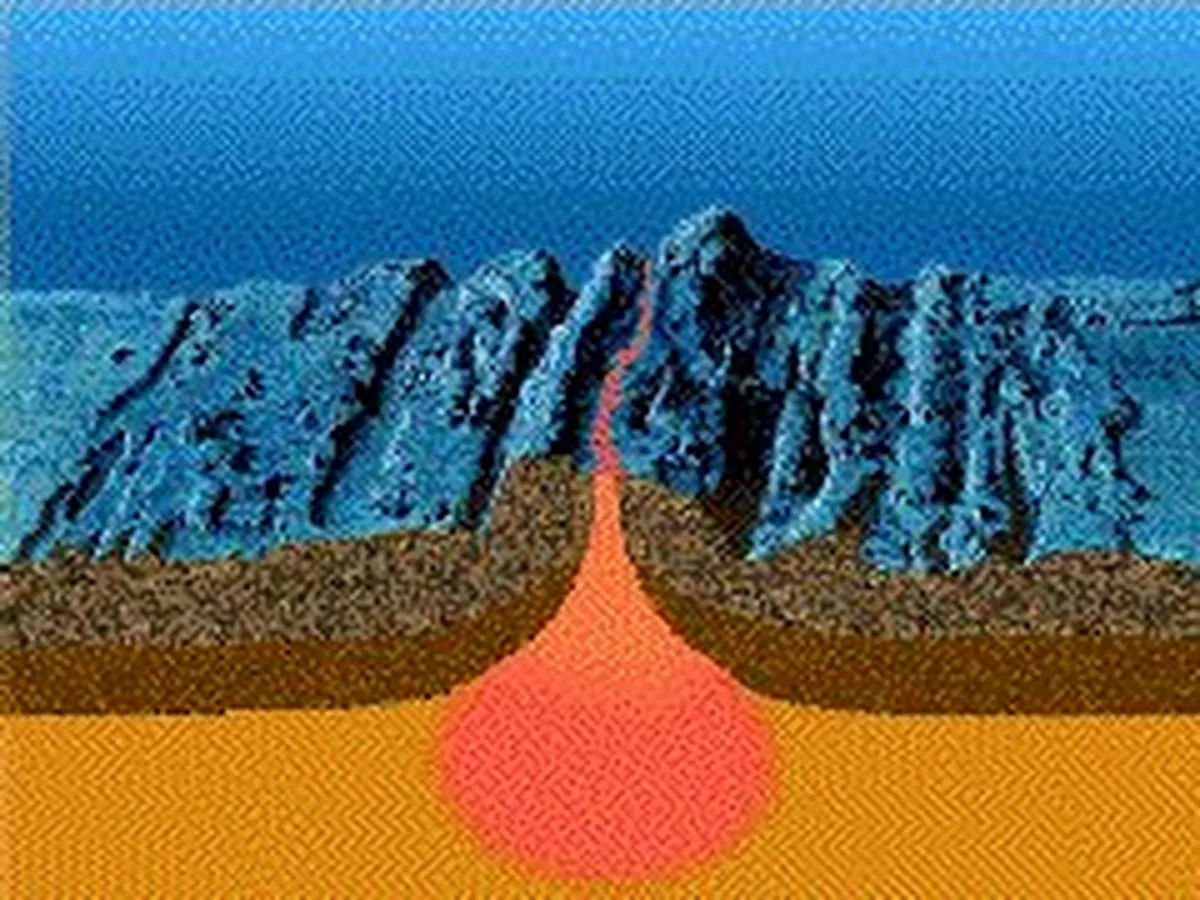

For the first time ever, scientists have directly observed the formation of a new piece of the Earth’ s crust in real time, capturing a massive tectonic event on the floor of the Indian Ocean where molten rock formed fresh seafloor. According to a study published in Nature, the event started on April 26, 2024, at the Southeast Indian Ridge and involved an outpouring of 160 million cubic meters of lava over 16 days, causing about 4 meters of subsidence along the ridge segment.
Capturing this event was possible only because scientists had deployed a specialized observatory called OHA-GEODAMS just two months earlier, in February 2024. The ScienceAlert report notes that the observatory was positioned to catch what is considered a ‘once-in-forty-year event’ — a full seafloor-spreading episode, where two tectonic plates pull apart and magma rises to fill the gap.
The total volume of lava erupted, reported by the Times of India, translates to roughly enough material to fill 64,000 Olympic swimming pools. While the raw scale is impressive, the real breakthrough is the observational data. For decades, seafloor spreading has been a process inferred from magnetic striping in the rock and other indirect evidence; this is the first complete, in-situ recording of the event as it happened.
The New York Post described the recording as the ‘birth’ of ocean floor, a framing that captures the novelty but undersells the scientific shift. This isn’t just about watching lava flow underwater. The data stream — seismic readings, geodetic measurements, and likely chemical sampling from the vented fluids — provides a granular timeline of how stress builds along a mid-ocean ridge, how the crust fractures, and how the magma reservoir below responds. That sequence has been theoretical until now.
The practical implications are significant for hazard modeling. Mid-ocean ridges are the planet’s most extensive volcanic systems, but because they’re remote and deep, their eruption styles and frequencies are poorly constrained. Seeing one full cycle from start to finish gives modelers a template for what ‘normal’ looks like at a spreading center, which in turn refines estimates of how often these events occur and how much material they move. It’s a single data point, but for a process that generates two-thirds of the Earth’s surface, it’s a point that has been missing for the entire history of geology.
Sources
- Ocean floor ‘birth’ in Indian Ocean is recorded for first time — New York Post
- World First: Scientists Witnessed a Piece of Earth’s Oceanic Crust Being Born — ScienceAlert
- Scientists witness first-ever seafloor spreading event as 160 million cubic metres of lava create new ocean floor — Times of India
- Anatomy of a seafloor spreading event captured by in situ seismogeodesy — Nature