Victoria’s rail-freight plan targets a more reliable regional network
Victoria has launched a 10-year plan to improve the capacity, reliability and efficiency of its regional rail-freight network while encouraging greater private investment and rail use.
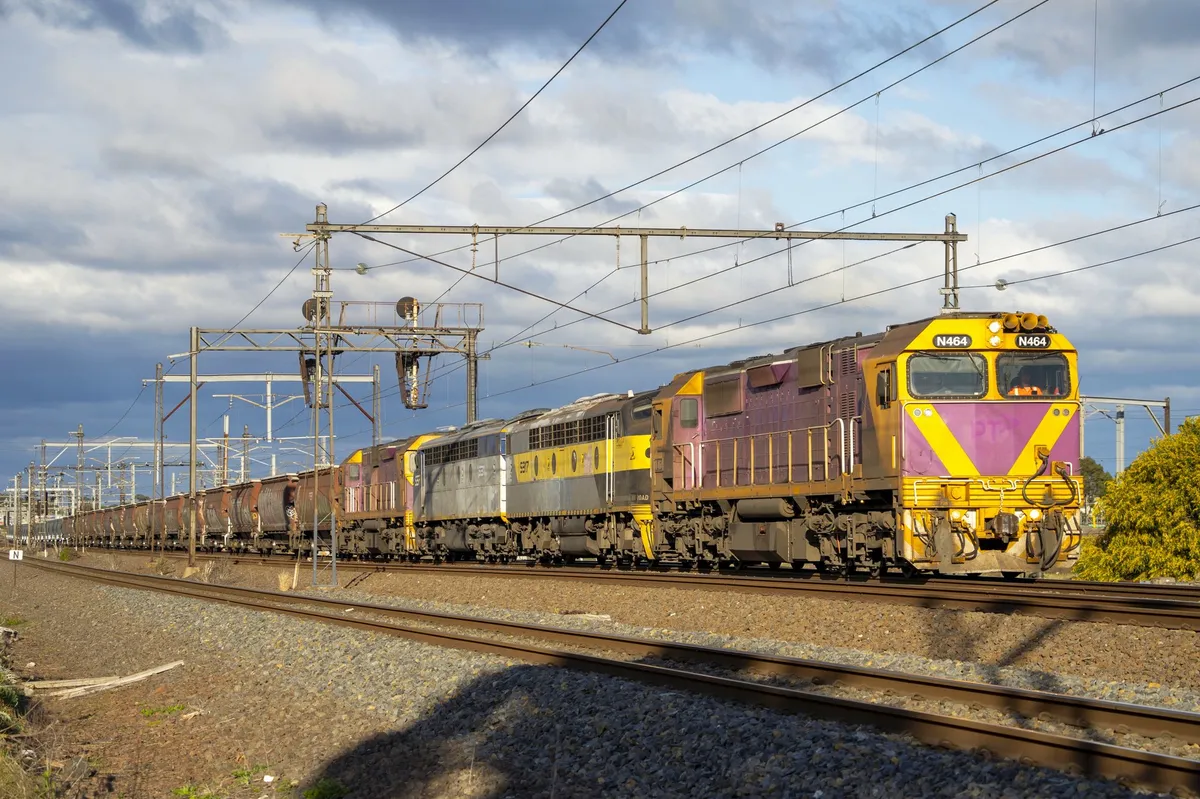

Victoria has launched a long-term plan for its rail-freight network, with the state government presenting the next decade as a period for improving reliability, expanding capacity and making regional lines more useful to freight operators. On 16 September 2026, Ports and Freight Minister Melissa Horne launched Freight on Track: the Victorian Rail Freight Plan 2026-2036, intended to give the industry a clearer basis for planning and investment.
The plan is built around a 10-year maintenance and upgrade programme that would bring regional rail lines to at least 21-tonne axle loads. That matters because axle-load limits determine how much weight trains can carry, and therefore how efficiently freight can move across the network. The proposal is not a single construction project but a framework for steadily lifting the standard of the regional system, with 10 actions covering network reliability, freight access and private investment.
Reliability is the less visible half of the capacity problem. A line can technically be available while still being difficult for freight operators to depend on if maintenance interruptions, restrictions or inconsistent access make schedules uncertain. A plan that combines upkeep with upgrades is therefore aimed at making the network more predictable as well as physically capable of carrying heavier trains.
The private-investment element is important because the plan itself contains no new funding commitment. It sets out the direction Victoria wants the network and industry to take, but it does not, by itself, provide the money needed to deliver every maintenance or upgrade project. The gap between a strategic plan and funded work will determine how quickly the proposed improvements become visible on the ground.
The Victorian Government says the updated plan is intended to attract private investment, improve rail-freight network capacity and efficiency, promote greater rail use and reduce emissions. Those aims place regional freight rail in a wider transport and environmental strategy: the network is being treated not only as infrastructure to maintain, but as a way to shift more freight onto rail and use existing capacity more effectively.
That makes the 2026-2036 plan a statement of intent with a practical test attached to it. Victoria has identified heavier axle loads, better reliability, improved access and private investment as the pieces needed for a stronger regional freight network. The next question is whether those priorities can be converted into funded maintenance and upgrades consistently enough for operators to plan around the railway they are being promised.