A codebook-based FMV decoder brings Command & Conquer cutscenes to the Atari ST
Jonas Eschenburg engineers a codebook-based FMV codec enabling the vintage Atari ST to decompress and play Command & Conquer cutscenes in real-time by splitting frames into addressable blocks, leveraging an 8MHz Motorola 68000 without exceeding 16-colour planar graphics limits.
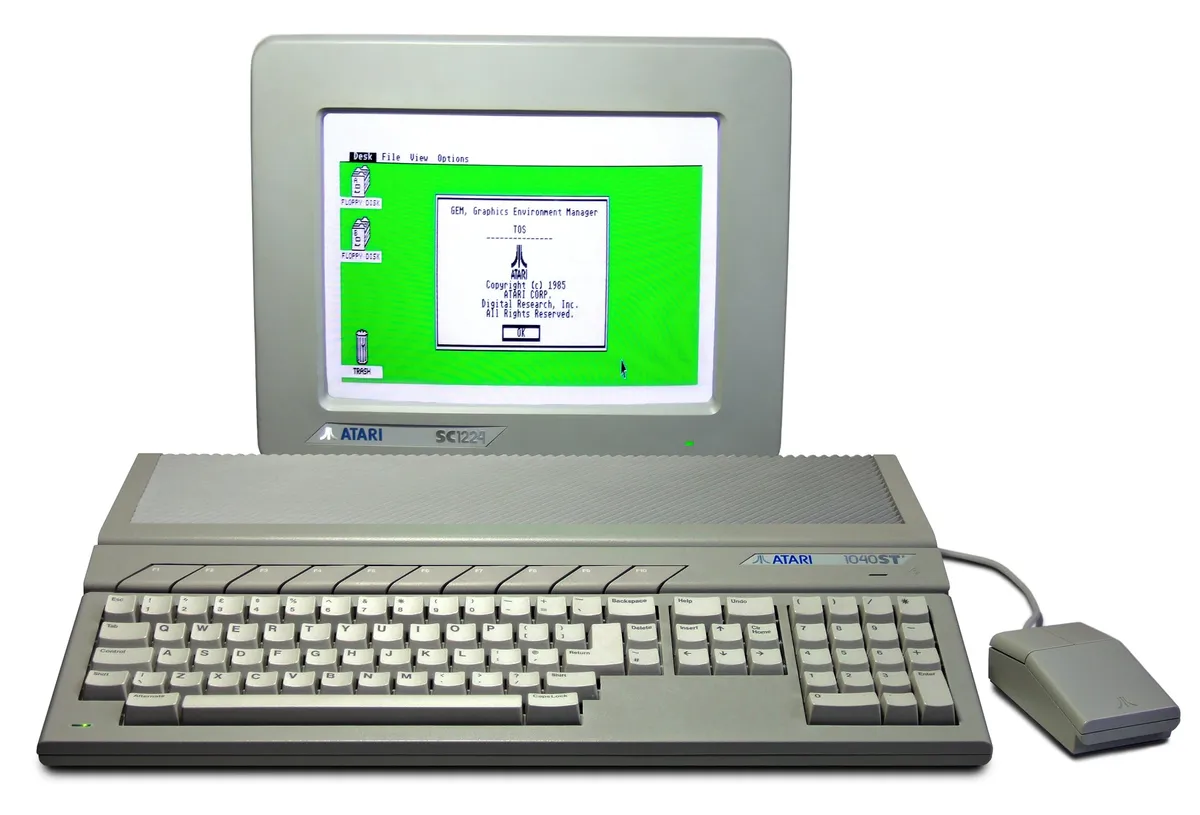

Jonas Eschenburg has completed a codebook-based full motion video codec that enables the vintage Atari ST to decompress and play back Command & Conquer cutscenes in real-time, utilizing a method that breaks frame data into addressable blocks to navigate the hardware’s limitations. The Hackaday report details how this decoder achieves playable playback speeds by splitting frames into addressable blocks, a technique that allows the system to process video data efficiently within the constraints of an 8MHz Motorola 68000 processor and its 16-colour planar graphics mode. The resulting port captures the game’s cinematic sequences natively on period hardware, demonstrating that frame-based decomposition can resolve the real-time decoding challenge without exceeding the machine’s memory bandwidth.
The codec implements a codebook scheme that maps compressed video information to graphical primitives compatible with the Atari ST’s native display architecture, avoiding the overhead of uncompressed pixel streams. By designing the decoder to exploit addressable block structures rather than sequential read patterns, Eschenburg ensures that processing cycles are devoted to decompression and rendering rather than struggling with bus contention or data alignment issues typical of multimedia on 1985 hardware. This architectural approach confirms that video playback on vintage systems depends heavily on how closely the decoder’s memory access patterns match the platform’s addressing capabilities, a balance that has been struck here by aligning the codec’s block processing with the system’s planar graphics design.
Eschenburg’s work delivers a functional implementation of this technique, proving that complex video formats can be supported on constrained machines when the decoding algorithm is tailored to the specific hardware topology. The port runs within the color and resolution limits established by the Atari ST’s original design, preserving graphical integrity while still extracting enough performance from the 8MHz processor to maintain continuous playback. For developers working with retro platforms, the project illustrates how codebook compression can be leveraged to overcome memory bottlenecks, turning addressable block structures into a mechanism for efficient multimedia delivery rather than a restriction on content types.
The availability of this decoder on Itch.io provides retro computing enthusiasts with a way to experience Command & Conquer cutscenes using authentic hardware setups or accurate emulation environments that replicate the machine’s memory map. This distribution allows users to verify real-time performance firsthand, confirming that the block-aligned decomposition strategy succeeds in delivering smooth video playback without resorting to external peripherals or modified firmware. The port stands as a practical application of vintage-optimized video techniques, showing how algorithmic ingenuity can extend the multimedia repertoire of classic systems like the Atari ST well beyond their initial software libraries.
This achievement underscores the ongoing potential of retro systems when treated not as obsolete technology but as hardware with unique structural properties waiting to be leveraged. By matching a codebook-based codec to the block-oriented address space of the 8MHz Motorola 68000 and operating within 16-colour planar graphics boundaries, Eschenburg has shown that real-time FMV playback is feasible on legacy architecture through precise design alignment. The project remains a testament to the value of hardware-specific optimization, delivering a working port that enables Command & Conquer cutscenes to play seamlessly on equipment released in 1985.