The forensic electronics work required to keep 1980s computers operational
Preserving 1980s-era hardware demands component-level restorations where custom silicon deficits and degraded components force builders to bypass failed pathways entirely through modern FPGA emulation and forensic electronics analysis.
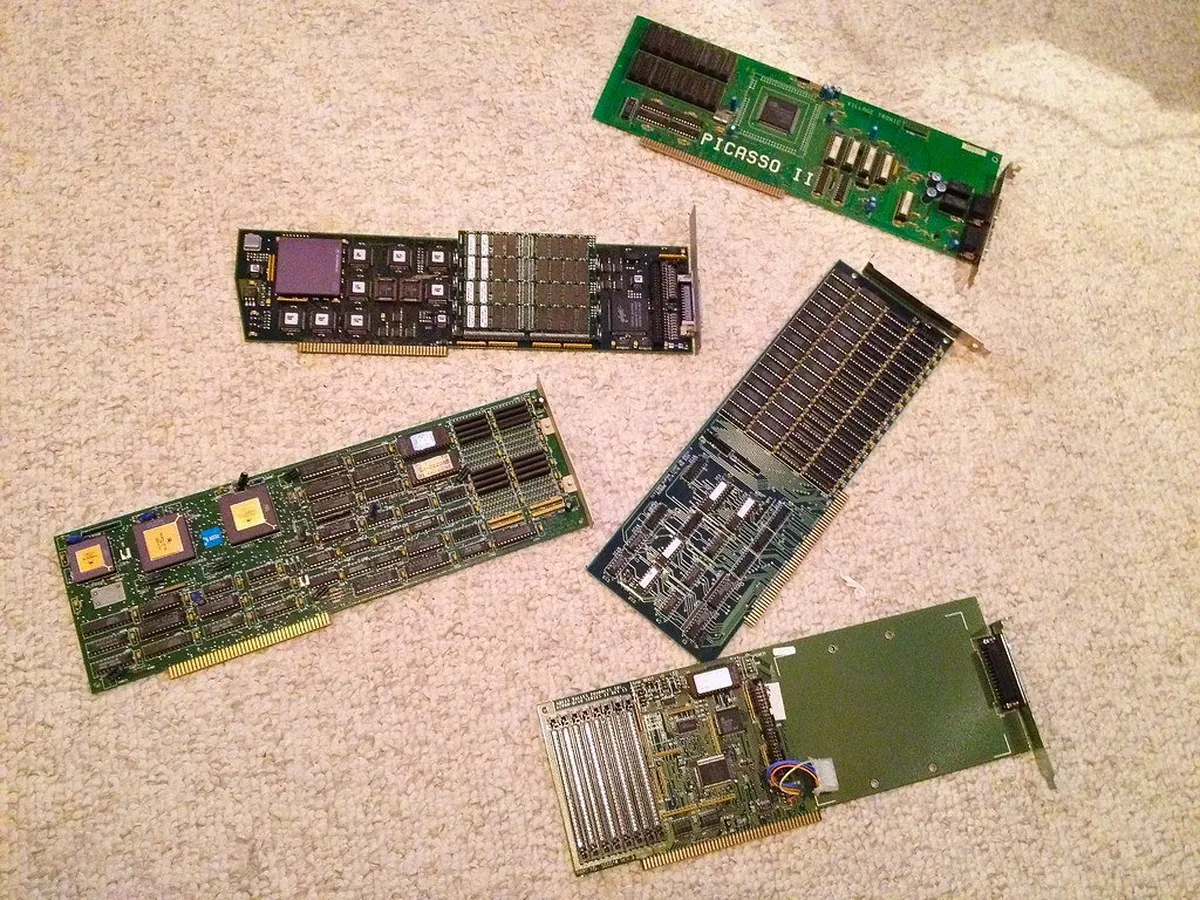
IT professional Earie Salmon runs a dedicated workshop in Australia for one of the most demanding forms of Retrocomputing currently being practiced. His YouTube channel, ‘Earie’s 8-Bit Workshop,’ documents the process of taking apart and rebuilding vintage hardware from the 1980s at the component level, treating each machine less like a museum display and more like an active engineering project. The work demands a level of technical precision that quickly outpaces simple nostalgia, turning preservation into a forensic exercise in modern electronics.
Salmon’s recent builds, which include a functional TI-99/22 and an Acorn Atom replica, highlight exactly where mechanical degradation hits first. Even when older logic boards can be recovered, restoring them requires component-level restorations of 1980s hardware that frequently run into counterfeit chips, obsolete PLAs requiring FPGA emulation, and degraded keyboard membranes. The process reveals how deeply physical aging compounds over time, forcing builders to bypass failed pathways entirely rather than rely on scavenged components that may themselves be counterfeit.
Once the physical barriers are mapped, the work shifts from sourcing parts to reverse-engineering functionality. Diagnosing attenuated signals across aging circuit boards requires oscilloscopes and logic analyzers capable of tracing degraded voltages through decades-old routing. The solution usually involves programming modern GAL16V8 chips to emulate dead ULAs and PLAs, effectively reconstructing the original silicon logic in contemporary components that still see active production. This precise methodology relies on forensic electronics expertise with test equipment to track down failing traces, a practice documented across a collection spanning 35–40 systems where custom silicon deficits remain the primary barrier.
Every system in that inventory eventually meets the exact same bottleneck: proprietary logic chips that cannot be simply ordered off a catalog or replicated on demand. When those custom gate arrays wear out, there is no replacement batch to pull from, only architectural gaps that must be filled with modern emulation or entirely bypassed circuit rewrites. The constraint is rarely time or capital; it is the fundamental inability of the semiconductor industry to continue manufacturing obsolete mask-programmed logic for decades-old architectures.
The result is a discipline that sits squarely between hardware conservation and contemporary embedded systems engineering. Keeping these machines operational is not a matter of polishing cases or updating legacy firmware, but of outlasting the physical limits of the components themselves. Each successful restoration proves that vintage computing can remain functional long past its original design life, provided the work treats technological obsolescence as an engineering problem to be solved rather than a historical artifact to be preserved behind glass.