300,000 People Are Trapped in Asia's Scam Compounds. The World Is Finally Counting Them.
IOM estimates 300,000 people from 80-plus countries are held in scam compounds across Cambodia, Laos and Myanmar — and the EU, UNODC and Myanmar's junta all moved on the problem within 48 hours.
.jpg)
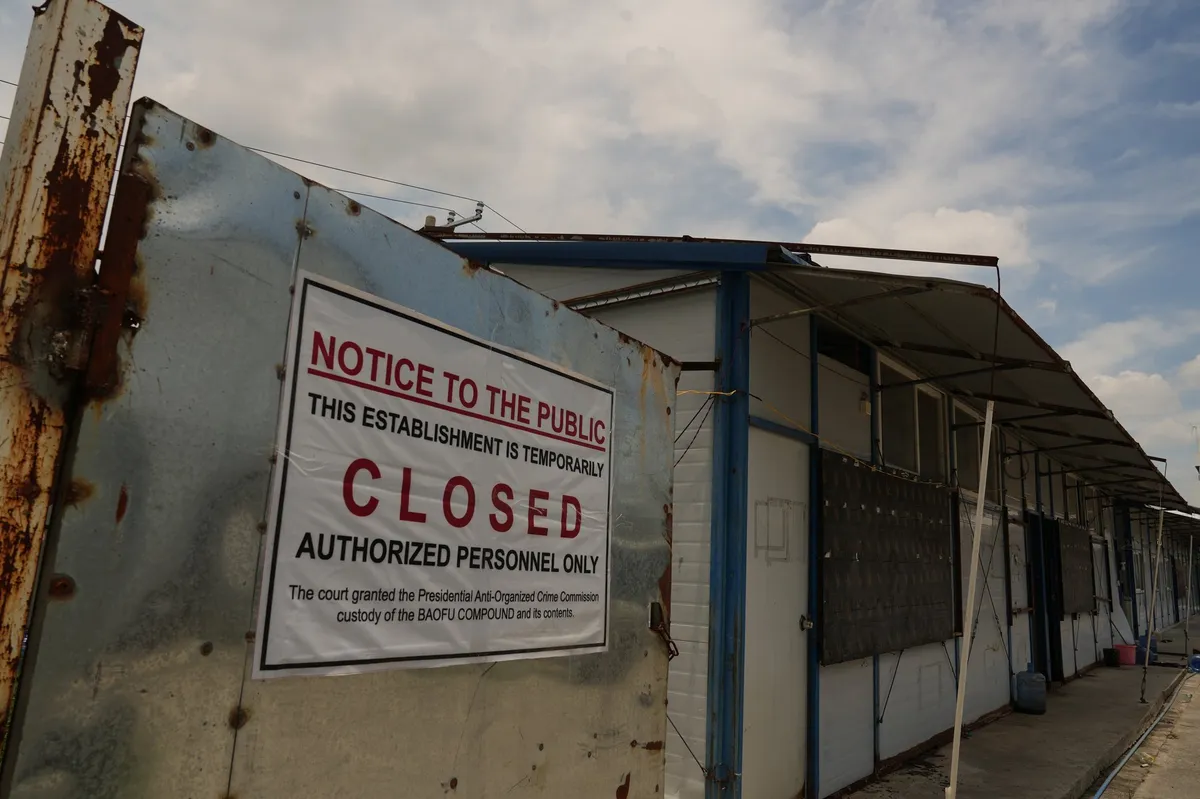
On July 28 in Geneva, IOM Director General Amy Pope put a number on something that human rights investigators, regional journalists and the occasional escapee from a Southeast Asian scam compound have been describing for years: roughly 300,000 people from more than 80 countries are currently being held in what she called prison-like conditions inside massive online scam compounds across the region, with Cambodia, Laos and Myanmar as the main concentration points. Most of them, according to Deutsche Welle’s reporting on Pope’s remarks, were lured in through fake job advertisements posted on social media — the modern, plausible-sounding version of a recruitment flyer.
The scale of the underlying fraud is what makes the human toll legible in dollar terms. UNODC’s 21 July 2026 report on Southeast Asia’s criminal economy put combined 2025 losses from scam offences across East Asia, South-East Asia, Australia and New Zealand at between $88.3 billion and $114.1 billion, with IOM citing the upper figure for East Asia, Australia and New Zealand alone. Those sums, flowing through call centres staffed by people who never agreed to run them, are the financial engine that keeps the compounds expanding.
Two days after Pope’s remarks, on 30 July — the UN’s World Day Against Trafficking in Persons, themed this year “Trapped behind the scam” — the European Union and UNODC issued a joint statement warning that human trafficking for forced criminality is rising globally, with a particular focus on victims forced to commit cyber-enabled fraud inside these compounds. The statement called for stronger cross-border action — a phrase that, in this context, mostly means cooperation between countries whose recruitment pipelines and whose compounds sit on opposite ends of a flight.
That pipeline is no longer purely Asian. UNODC’s July report documented that the recruitment networks are now reaching toward Europe and North America, with job advertisements tailored to people who speak German, Polish, Dutch, Spanish, Italian, French, Swedish, Norwegian and English. The shift matters because it changes who ends up inside the compounds: a trafficking victim from Warsaw or Lyon is a far harder diplomatic problem for the Lao or Cambodian authorities hosting the site than a trafficking victim from Myanmar or the Philippines.
There is at least one piece of movement on the legal side. On the same day Pope spoke in Geneva, Myanmar’s military-backed parliament approved an “Anti-Online Scam Bill” authorising severe punishment — including execution — for anyone who uses violence, torture or detention to force people to commit online scams. It is the kind of statute that tells you both how seriously the junta is now treating the compounds inside its territory and how far the practice has spread that the death penalty has become a politically available response. The EU–UNODC joint call, the IOM estimate, and the Myanmar bill are three different instruments aimed at the same sprawling industry, and none of them addresses it alone.
Sources
- UN says online scam center trafficking is skyrocketing — Deutsche Welle (DW)
- UNODC and the EU warn of rising human trafficking for criminal activities in scam centres — European Commission – Migration and Home Affairs
- New UNODC report reveals scale of South-East Asia’s ever more interconnected criminal economy — UN Office on Drugs and Crime (UNODC) press release