Global Hunger Eased for a Third Year. Africa Now Carries the Highest Burden.
The UN SOFI 2026 report shows global hunger declined for a third consecutive year in 2025, but Africa has overtaken Asia in the absolute number of undernourished people, and more than half its population faces food insecurity.
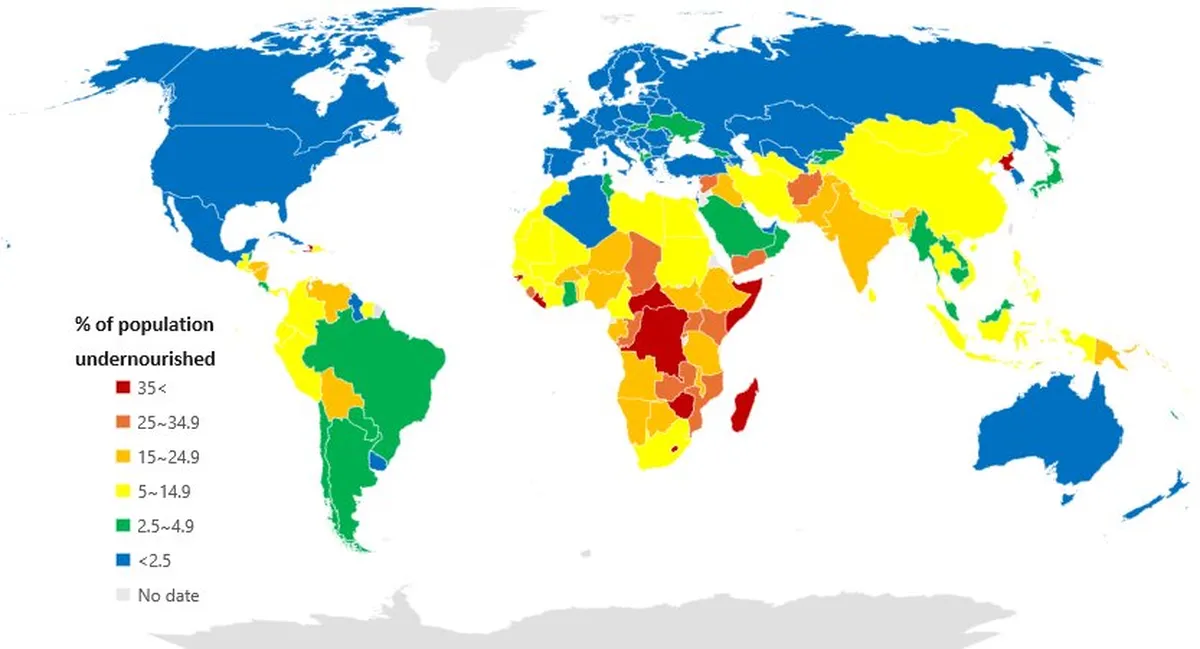

The UN’s 2026 State of Food Security and Nutrition in the World report, released July 21 at FAO headquarters in Rome, contains a tally that needs to be held in the mind for a moment: global hunger declined for a third consecutive year in 2025. An estimated 645 million people — 7.8% of the global population — faced hunger last year, down from 8.1% in 2024.
The FAO, one of the five agencies behind the report, framed the numbers as proof that hunger is not inevitable. The 645 million figure represents nearly 14 million fewer people than in 2024 and 43 million fewer than at the 2022 peak, when global undernourishment hit its highest level since the start of the Sustainable Development Goal monitoring period.
Beneath the global aggregate, the geography of hunger shifted in a way the report’s authors had flagged for years. Africa now has the highest number of hungry people in absolute terms, with 309 million undernourished in 2025, surpassing Asia’s 292 million for the first time. Even as that threshold was crossed, the continent recorded a break in its own trend: hunger prevalence fell from 20.3% in 2024 to 20.0% in 2025, the first interruption of an upward run that had held since 2017, according to the FAO.
The same report shows that food insecurity runs far deeper than undernourishment alone. More than half of Africa’s population — 56.6% — faced moderate or severe food insecurity in 2025, compared with 20.3% in Asia and 8.7% in Northern America and Europe.
The progress is real, but the trajectory is not fast enough to hit the Zero Hunger target by 2030. The UN News summary of the report noted that current projections still put 510 to 520 million people in hunger at the decade’s close, leaving the world off track for SDG 2.
For the FAO, the meaning of a third consecutive year of decline is that hunger is not a fixed condition. The report’s authors point to investments in agriculture, social protection, and resilience-building in countries that have pulled their numbers down. But the regional split, with Africa now carrying the largest absolute burden even as its prevalence inches downward, makes clear that the global number is no longer moving as one thing. The decline that began after 2022 is still a decline, but it is no longer the same story everywhere.
Sources
- UN report: Global hunger levels ease for third consecutive year as regional disparities persist — World Health Organization
- SOFI 2026: Hunger not inevitable, FAO says as global hunger report shows progress — Food and Agriculture Organization
- Global hunger declines again but progress remains uneven across regions — UN News