UN States Vow to Fix $4 Trillion SDG Funding Gap as Major Donors Slash Aid
UN member states pledged reforms to close a vast $4 trillion annual SDG funding gap, even as a new OECD report shows official development assistance from major donors fell by over 23 percent last year.
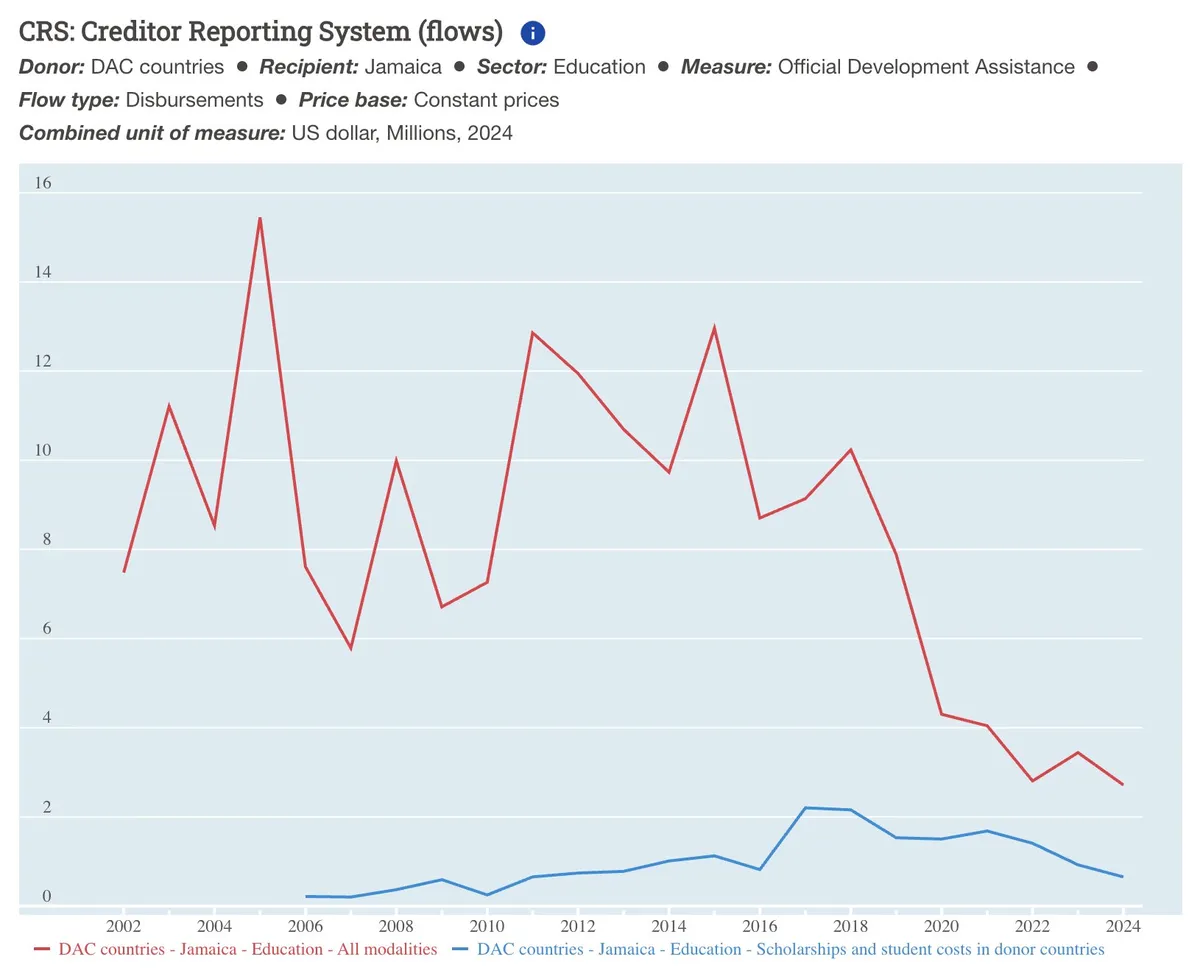
_disbursements_to_Jamaica%E2%80%99s_education_sector_between_2002_and_2024,_including_total_education_aid_and_the_proportion_allocated_to_scholarships_an.png)
On July 15, UN Member States formally adopted a declaration pledging to implement a series of reforms aimed at closing a $4 trillion annual financing gap for the Sustainable Development Goals. The declaration marked the conclusion of the UN’s High-Level Political Forum on Sustainable Development, which had been meeting in New York since July 7 under the auspices of the UN Economic and Social Council. In it, countries recommitted to the SDGs but acknowledged that meeting them was impossible without new money.
The annual ministerial declaration includes a plan for mobilising public and private investment, expanding debt relief mechanisms, and combating corruption. These pledges are a direct response to the scale of the shortfall, which has grown even as the political rhetoric around sustainable development has intensified. The document is also a tacit admission that the existing model, heavily reliant on official development assistance from wealthy nations, has broken down.
That breakdown is quantified by a 23.1 per cent drop in ODA between 2024 and 2025, driven largely by falling aid contributions from the United States, United Kingdom, Germany, France and Japan, according to data from the Organisation for Economic Co-operation and Development cited by the Inter Press Service. The sharp decline comes despite a series of prior multilateral agreements, including the Sevilla Commitment, which were supposed to scale up financing.
The reforms itemised in the declaration seek to shift the financing burden away from volatile aid flows and toward more predictable mechanisms like domestic resource mobilisation and private capital. In theory, this is a more sustainable path. In practice, it faces a daunting credibility test, given the track record of pledges like the Sevilla Commitment immediately preceding a year in which major donors pulled back by nearly a quarter.
The structure of the problem is now clear: the gap is $4 trillion a year, aid is falling, and the declaration is the latest in a line of high-level promises to fix it with systemic reforms. What is less clear is whether this iteration will be treated any differently by the capitals that just cut their checks, or whether the real story of the 2026 HLPF will be that the most concrete number to emerge was a measure of how far official assistance has already receded.
Sources
- As aid dries up, countries pledge to close the $4 trillion development gap — UN News
- As aid dries up, countries pledge to close the $4 trillion development gap — UN DESA (United Nations Department of Economic and Social Affairs)
- Countries vow faster action on development financing in annual declaration — Global Issues (Inter Press Service)