
Jefferson Lab's search for Y(2175) yields two unexpected structures
An experiment hunting an exotic particle instead found evidence for two strange new structures that could belong to the XYZ family.
Fundamental physics, quantum technology and new materials.
An experiment hunting an exotic particle instead found evidence for two strange new structures that could belong to the XYZ family.
Carnegie Mellon physicists have demonstrated an in-plane version of the anomalous Hall effect, overturning the long-held assumption that the Hall response only appears when a magnetic field is perpendicular to a material.
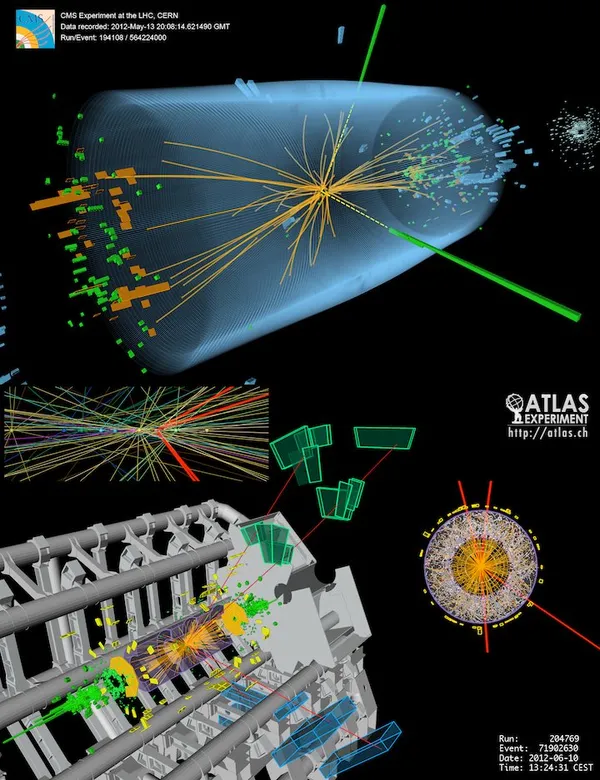
At ICHEP 2026 in Brazil, both CERN experiments reported their most sensitive searches for double-Higgs production — and ATLAS saw a 2.6 sigma excess that particle physicists are taking seriously.
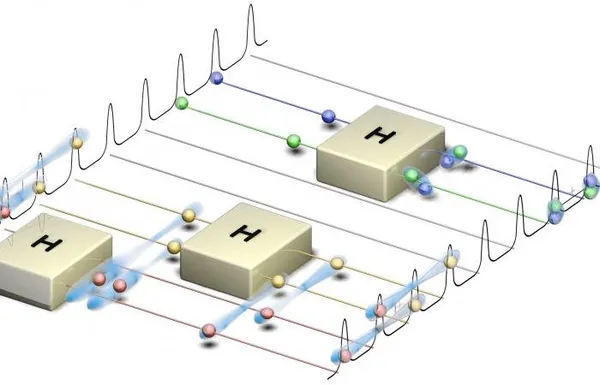
Researchers from NIST, the Joint Quantum Institute at UMD, and Qunnect distributed polarization-entangled photons over 62 km of live commercial aerial fiber for a continuous 24-hour trial, sustaining entanglement with 92.8% operational uptime.

Monash physicists have calculated that mixtures of bosons and fermions can spontaneously form stable, self-bound quantum droplets held together by a precise internal balance, overturning decades of assumptions about strongly interacting systems.

The Muon g-2 collaboration reports its most sensitive direct measurement of the muon electric dipole moment yet, finding it consistent with zero and tightening constraints on physics beyond the Standard Model.
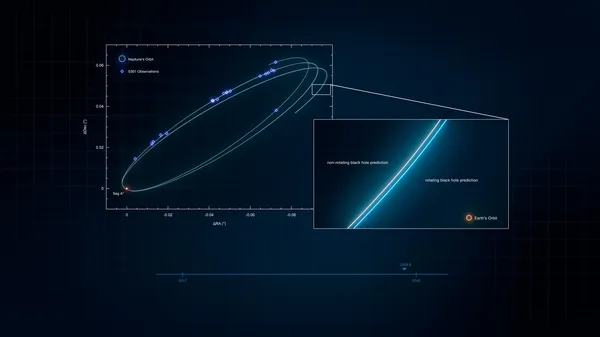
Star S301 orbits our galaxy's supermassive black hole in just 8.7 years, approaching close enough to potentially measure the black hole's spin within a decade.
The Hubble Space Telescope has detected definitive evidence that the Milky Way swallowed a dwarf galaxy named LKH 11.8 billion years ago, revealing a previously unknown merger from the earliest epochs of galactic assembly.
NIST and collaborators sent entangled photons through 62 km of commercial above-ground fiber in the DC suburbs for over 20 consecutive hours at 92.8% uptime, a demonstration that quantum networks may not require purpose-built underground infrastructure.
A new superconducting device demonstrates the conversion of heat near absolute zero into useful work, marking a significant step in quantum technology.
China's Long March 7A rocket exploded 85 seconds after launch on August 10, marking the vehicle's second failure and raising questions about the engines shared with the upcoming Chang'e-7 lunar mission.
Petermann Glacier in northwest Greenland calved a 76.4 km² ice island on August 4, 2026, its largest floating-ice loss since 2012, while satellite data reveals two more massive islands are likely to detach soon as the glacier's floating tongue continues to fracture.
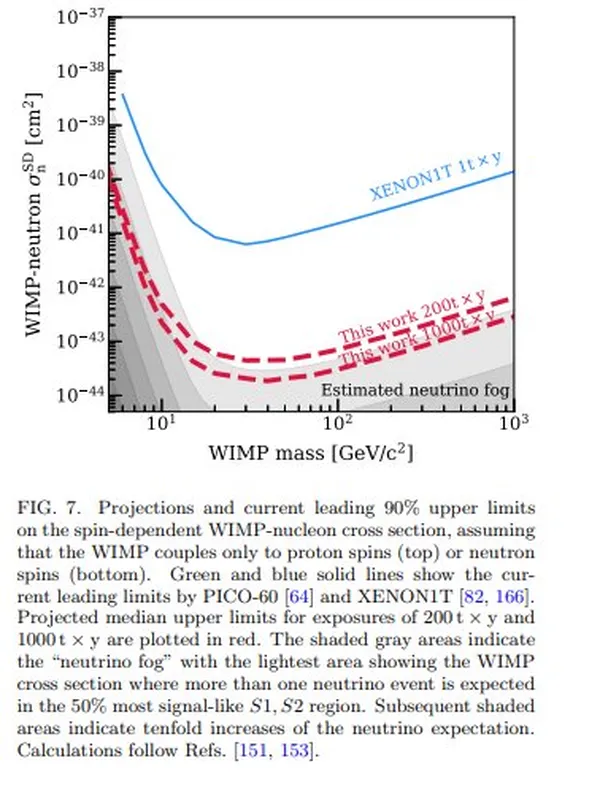
The XENONnT experiment has published record-setting limits on axion-like particles and dark photons, nearing the neutrino fog threshold using a novel detection method.
A new multidimensional measurement at CERN's Large Hadron Collider reveals evidence of gluon saturation inside heavy nuclei, challenging decades of nuclear shadowing theory.
The BESIII Collaboration has confirmed the X(2370) as a pseudoscalar glueball after 15 years of study using 10 billion J/ψ decays — the first experimental glueball ever observed.
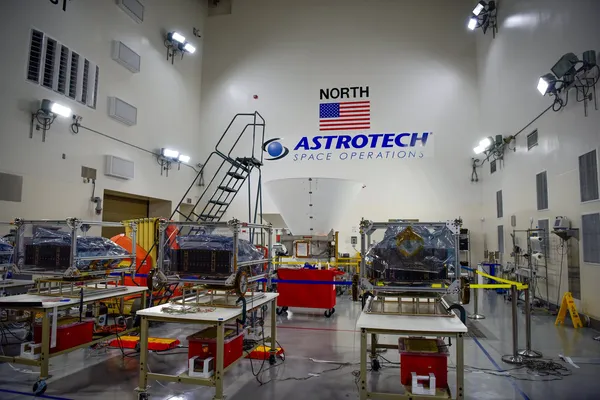
NASA's PUNCH mission predicted the arrival of a May 31, 2025 coronal mass ejection to within 30 minutes, a tenfold improvement over the previous 12-hour forecast window.
HRL Laboratories demonstrates an 18-qubit silicon quantum processor with a custom CMOS controller operating at -450°F inside the cryostat, running error correction autonomously without real-time room-temperature electronics.
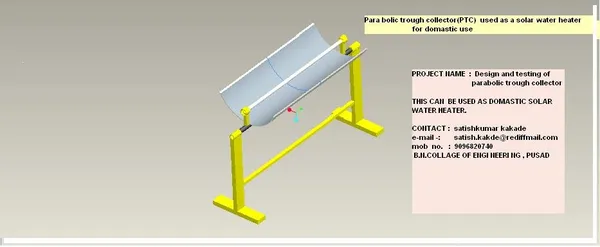
Researchers prove ordinary sunlight can generate quantum-entangled photon pairs using a cone-shaped solar concentrator, challenging the long-held assumption that artificial laser light is required.
A technique to grow niobium diselenide under graphene produces wafer-scale superconducting films that remain stable in air, overcoming a key barrier to scalable quantum devices.
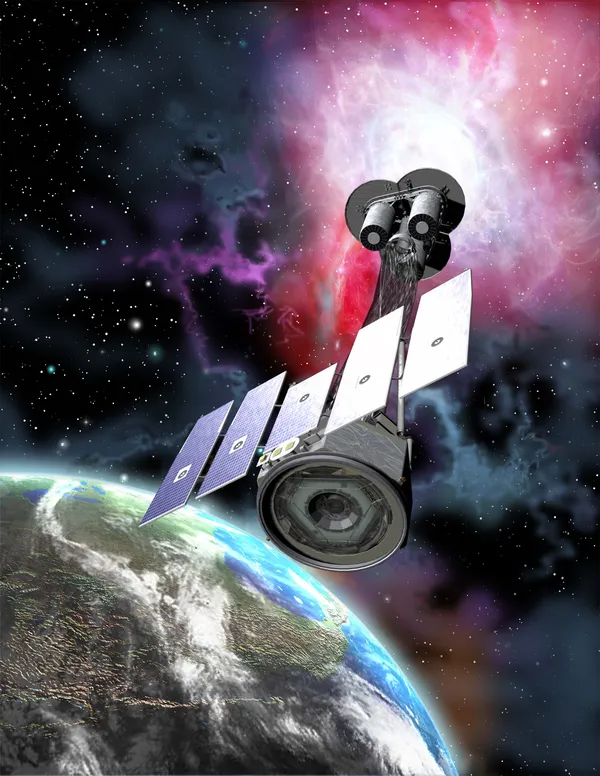
NASA's IXPE telescope captures over 140 hours of magnetar observations revealing how ultra-strong magnetic fields polarize the quantum vacuum itself, confirming a ninety-year-old quantum electrodynamics prediction.
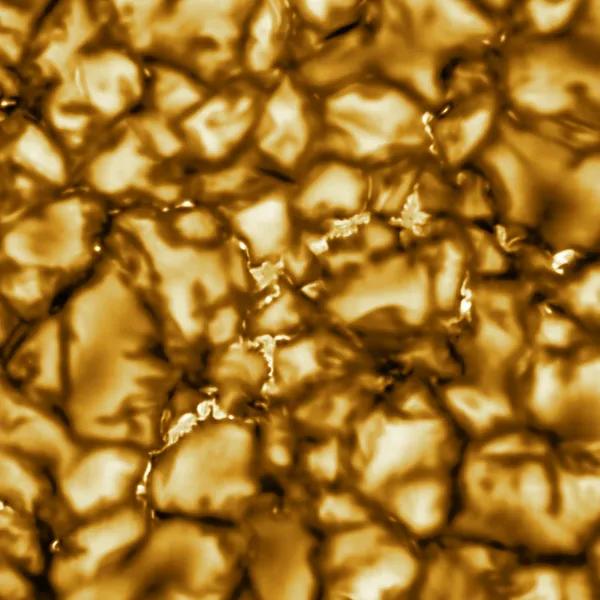
Scientists using the NSF Daniel K. Inouye Solar Telescope have confirmed the presence of Kelvin–Helmholtz instability on the Sun's photosphere for the first time, validating a decades-old theoretical prediction and revealing a hidden channel for plasma mixing and energy transport at the solar surface.
Researchers have built a device that uses two colors of laser light to direct an electronic current through a semiconductor without any external electrical power.