LHCb Announces First Single-Experiment Evidence for the Rarest Particle Decay Ever Observed
After a 42-year search, LHCb reports 3.2σ evidence for the Bd → μ⁺μ⁻ decay, a process the Standard Model predicts at roughly one in ten billion.
Fundamental physics, quantum technology and new materials.
After a 42-year search, LHCb reports 3.2σ evidence for the Bd → μ⁺μ⁻ decay, a process the Standard Model predicts at roughly one in ten billion.
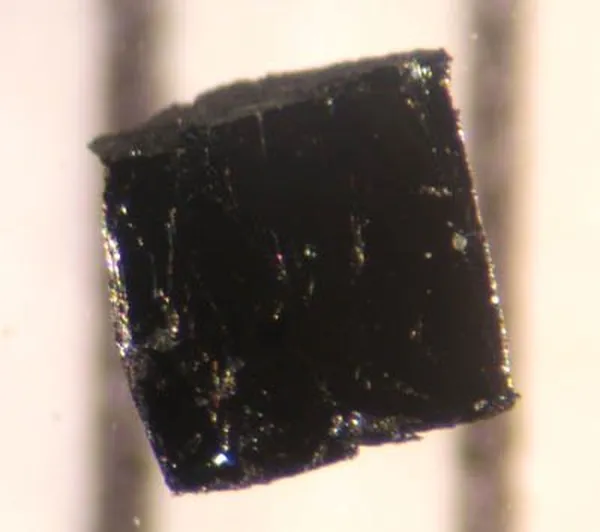
Experiments on UTe2 reveal it can sustain two distinct superconducting order parameters simultaneously, strengthening its candidacy as a material that could enable fault-tolerant quantum computing.
Northwestern physicists trapped a single positron at near-absolute zero for months, building a one-particle cyclotron aimed at the most precise CPT-symmetry test yet.
Cuprate experiments show the pseudogap competes with superconductivity rather than helping it form.
The Martian Moons eXploration (MMX) mission has launched, beginning a multi-year effort to study Phobos and bring the first samples back to Earth.
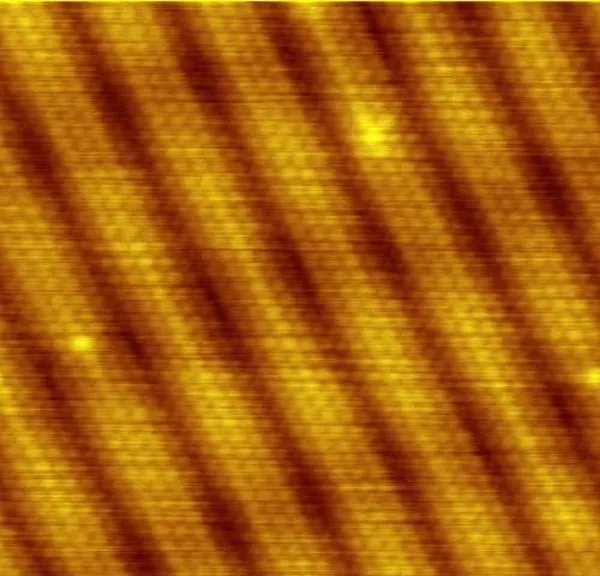
Researchers at Japan's MANA found that atomic-scale surface steps guide superconducting vortices, letting them move over a thousand times more easily in one direction — a result with implications for low-power superconducting devices.
Researchers at Caltech and Yale have developed a first-principles quantum chemistry approach to calculate the Kondo effect in real metals with unprecedented accuracy.
Research by physicist Kostya Trachenko indicates that fundamental physical constants must fall within a narrow band for liquids to flow with viscosities suitable for cellular biology.
Researchers at the University of Illinois Urbana-Champaign have found direct evidence that pair density waves can survive in uranium ditelluride after ordinary superconductivity disappears.
The 2026 Nobel Prize in Physiology or Medicine goes to Karl Deisseroth, Peter Hegemann, and Georg Nagel for their work developing optogenetics, a light-based method that gives researchers precise control over individual nerve cells in living brains.
A Transagent grain train derailed near Meja station on October 11, closing the Plase–Meja railway section after the driver had already reported brake failure.
On 6 October 2026, the Royal Swedish Academy of Sciences awarded the Nobel Prize in Physics to Francis Halzen for decisive contributions to the IceCube Neutrino Observatory and the discovery of high-energy neutrinos of astrophysical origin.
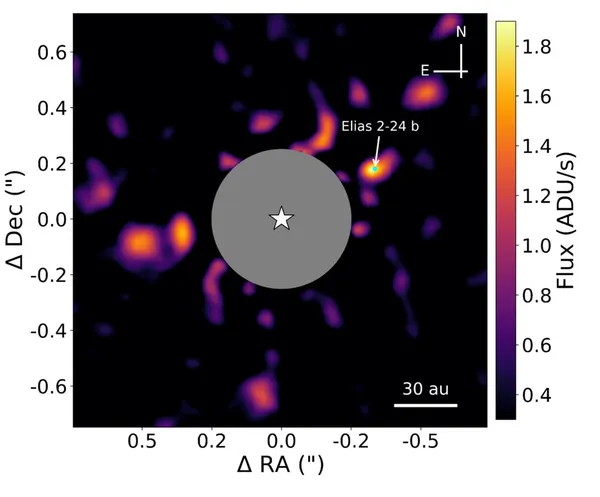
A Jupiter-size planet still gathering material from its natal disk challenges formation models with its rapid growth at 55 times Earth's orbital distance.
OpenAI says 10,000 coordinating AI agents spent 88 hours producing a finite-time singularity proof for the 3D Navier–Stokes equations, with a Lean formalization to back it. The trouble is that a parallel team at NYU and Anthropic posted closely related results 12 hours earlier, and one of them is now publicly asking whether OpenAI's models had access to his work.
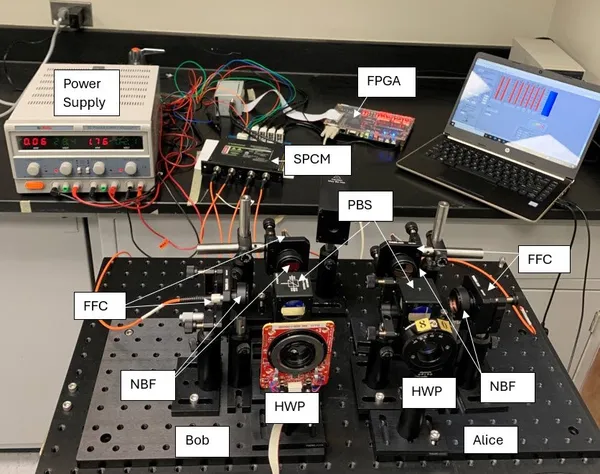
Physicists have observed quantum entanglement in some of the most massive and short-lived particles ever created, pushing the boundaries of quantum physics.
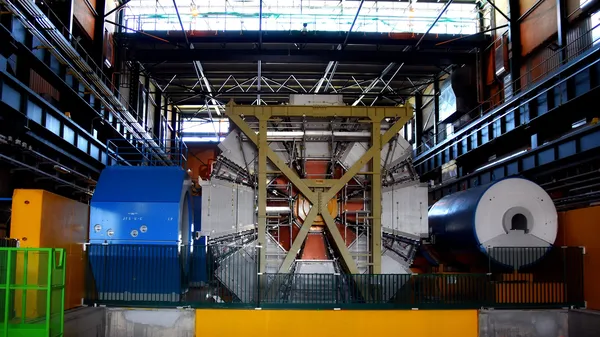
The ATLAS Collaboration has presented first evidence of the Higgs boson decaying into a virtual photon and a real photon, a process that occurs in roughly 1 in 10,000 Higgs decays, reaching 3.4σ significance by combining Run-2 and Run-3 data.
Researchers at CERN have found strong evidence of quantum entanglement between Z bosons produced from Higgs boson decays, marking a significant step in understanding multi-state quantum systems.
Researchers at Okayama University have identified three distinct spin-triplet superconducting phases in K₂Cr₃As₃, a finding that clears previous ambiguity and opens a tunable route toward topological quantum states relevant for fault-tolerant quantum computing.
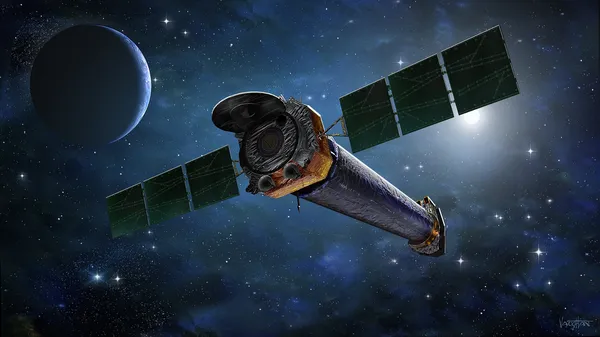
NASA's Chandra X-ray Observatory has detected a new class of compact binary systems that emit unusually low-energy X-rays and intense ultraviolet radiation, potentially resolving two long-standing astrophysical puzzles.
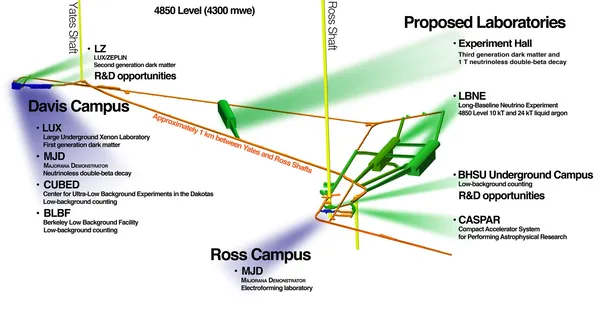
A single anomalous event in the LUX-ZEPLIN dark matter detector has reached 2.6 sigma, a tentative signal that falls well short of discovery and now awaits confirmation from other experiments.
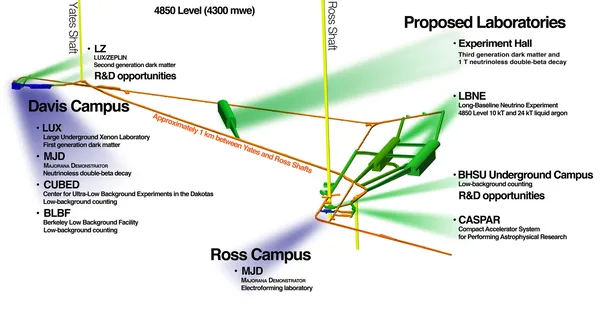
The LUX-ZEPLIN experiment logged a single unexplained particle interaction in 220 days of data — its best dark-matter hint yet, but short of discovery thresholds.
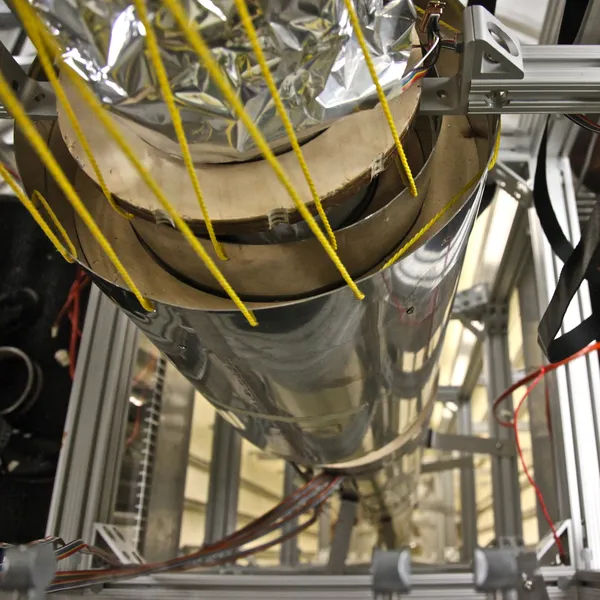
An international team has directly observed the quantum phase of free fall for the first time, confirming that the equivalence principle survives intact when applied to a quantum object.